
Vignette
Vignette darkens or brightens the edges of your photo to naturally draw attention toward the center. A subtle dark vignette adds mood and focus, while a light vignette creates an airy, dreamy border effect.
Framing From the Inside

A vignette darkens or brightens the outer edges of your photo, creating a natural, graduated frame that directs the viewer's eye toward the center of the image and establishes a visual boundary that gives the composition a sense of containment and intentionality. It's one of the oldest and most enduring compositional tools in the history of visual art — used in portrait painting centuries before cameras existed, and adopted almost immediately by photographers as a way to add focus, depth, and a sense of formal composition to their images. In digital photo editing, the vignette has become one of the most widely used finishing touches in photography, and for good reason: when applied with restraint and sensitivity to the specific image, it can significantly enhance the viewer's experience of a photo by creating a subtle but powerful centripetal force that draws attention inward and keeps it there.
Dark Vignette vs. Light Vignette

The two primary directions of vignetting produce dramatically different results and serve fundamentally different creative purposes. A dark vignette — which is by far the more commonly used of the two — adds visual weight and shadow to the outer edges of the frame, pulling the viewer's attention inward with increasing urgency as the darkness deepens. At subtle levels, it adds mood, focus, and a quiet sense of drama without calling attention to itself. At stronger levels, it becomes a defining aesthetic statement, giving images a contained, intimate, almost theatrical quality that works particularly well in moody portrait photography, cinematic editorial work, dark still life, and any composition where the subject needs to feel like it's emerging from, or surrounded by, darkness. A light vignette works in the opposite direction, brightening the edges of the frame to create an airy, open, glowing border effect that feels soft, romantic, and expansive rather than contained and dramatic. This brighter approach is well suited to high-key photography, soft portraiture, wedding and lifestyle content, and any image where the aesthetic goal is lightness, warmth, and an open, welcoming quality.
Subtle Is Almost Always Better
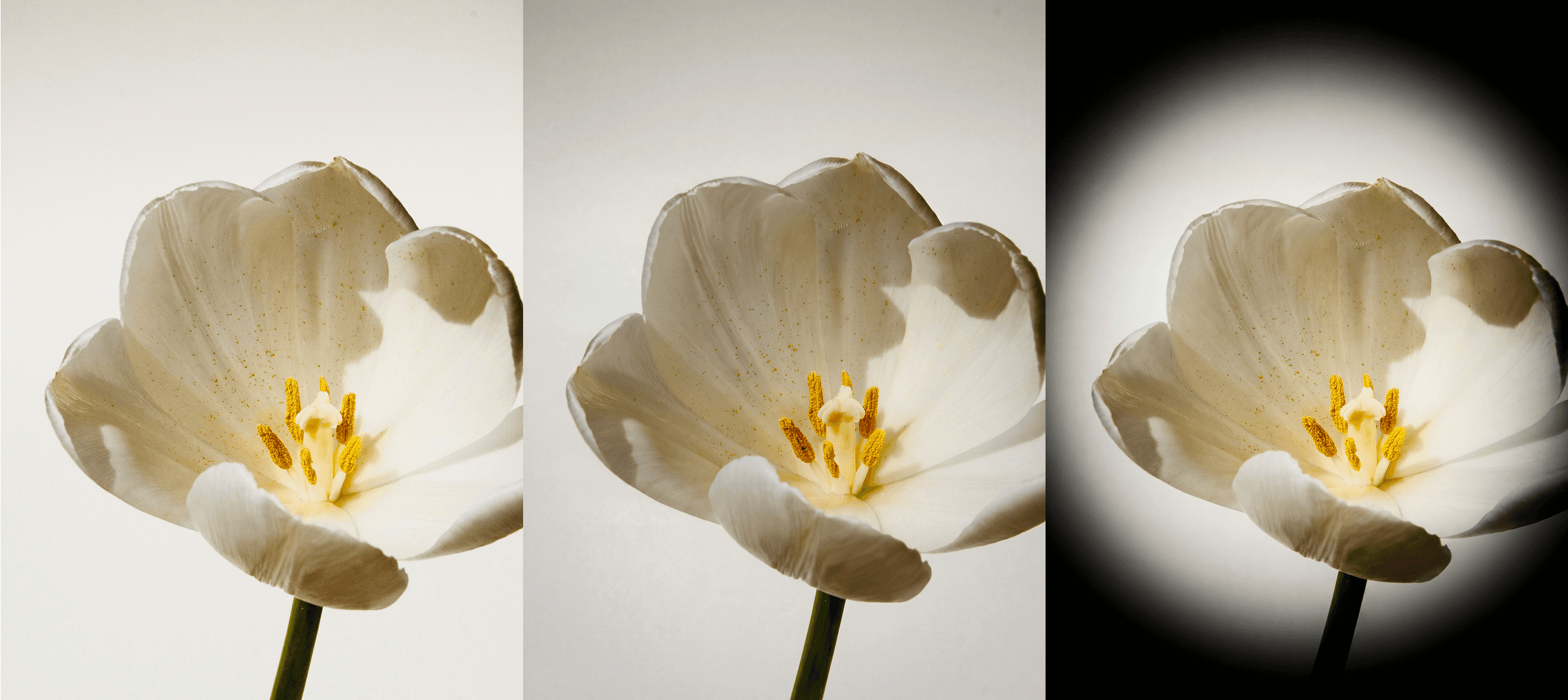
The most effective vignettes share a single defining quality: they're virtually invisible as an effect while being immediately felt as an experience. The viewer's eye moves naturally toward the center of the frame, the subject feels more present and more compelling, and the composition feels more resolved and intentional — all without the viewer being consciously aware that a vignette is responsible for any of it. This level of subtlety is the benchmark to aim for, and it's considerably harder to achieve than it might seem. The most common mistake with vignetting is applying too much too quickly — the graduated darkening becomes visible as a distinct ring around the image, the edges feel artificially crushed, and the effect announces itself in a way that immediately dates the edit and makes it look like a preset rather than a considered decision. Apply vignettes in small increments, evaluate at a distance from the screen, and consistently ask whether the effect is serving the image or simply decorating it. If you can see the vignette, it's almost certainly too strong.


